Before public libraries gained popularity, only the wealthy and educated elites had access to books. Members of specific institutions could also be allowed to borrow. Many aristocrats and private property owners often maintained their private libraries within their enclosed estates. They could only lend books to members of their social class. Institutional or university collection libraries, such as church or college libraries, maintained books that they could only lend to the clergy, academics, or students of specific institutions. That meant that poor workers had no access to books, which limited their chance of seeking knowledge. The emergence of subscription and commercial circulating libraries meant partial relief for more people. These libraries allowed members to borrow books, but on a subscription basis. However, these were only accessible to the middle and upper-middle class, who could afford the subscription.
When Books Were Rare and Expensive
In the ancient medieval times, before the modern manufacturing and printing press, books were rare and very expensive. Books were hand-copied, and producing a manuscript required a considerable amount of money, time, and skilled manpower. As a result, books were a luxurious commodity reserved only for the wealthy elites. This did not mean that books could not be shared; people could still borrow books, but borrowing was a privilege. Borrowing was a strictly guarded principle, usually based on collateral, trust, and sometimes physical security. Security and safety of the books were key since it was difficult to replace a stolen or damaged book.
Monasteries and Institutional Libraries
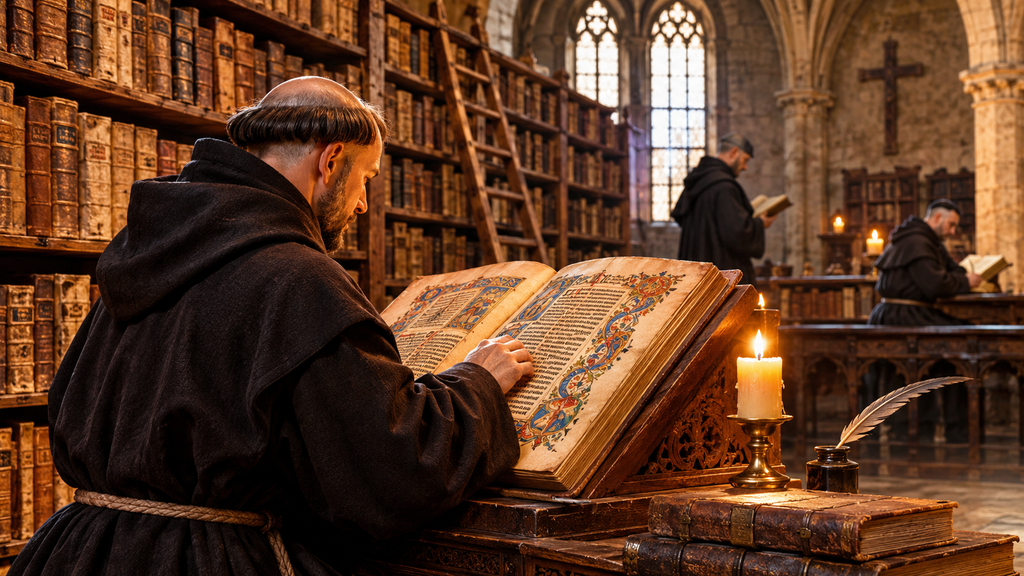
Nuns and monks had access to theological, scriptural, and philosophical texts in the monastic libraries. This also applied to members who worked in the monastery. Benefactors and patrons were also allowed to borrow books. These included high-ranking church officials and wealthy donors. They were allowed to borrow books in exchange for a large material or financial deposit. Inter-monastery loans were also common. Under this arrangement, visiting scholars and monks from other allied monasteries were allowed to borrow books for re-copying. However, they had to provide substantial collateral or a formal guarantee that the borrowed volume would be returned safely. Outsiders, uneducated, and poor members of the general public were barred from entering the monastic library or borrowing reading materials.
University libraries operated almost similarly to monastic libraries. Only the enrolled students (usually male) and scholars were allowed access to reading texts. They had to be registered with the medieval university to access books. Professors and other academic staff used the lecture manuscripts and reference collections for writing and teaching purposes. Books were closely cataloged, heavily rationed, and sometimes only lent under strict pledges or pawns. Townspeople and those who were not members of the university or church were never allowed to browse the book collections or enter the library.
Wealthy and Royal Family Libraries
Outside academic and religious institutions, wealthy individuals and royal families had their books behind closed doors. Nobles, kings, queens, merchants, and educated aristocrats collected books as a symbol of intellectual achievement, prestige, and personal interest. The private collections often included maps, classical writings, religious manuscripts, and scientific works. Being private spaces, access to these libraries depended on the owner’s willingness to share. Scholars with royal connections were lucky to be permitted to consult a manuscript. Private library ownership reinforced the social class difference that was dominant at the time. Wealthy elites could afford private collections. Those in their social class could access books from such collections. But the poor and uneducated people with no connections had to rely on oral storytelling since they were not allowed to borrow books.
The Rise of Subscription and Circulating Libraries
Circulating and subscription libraries changed the narrative of borrowing books. These were privately-owned, profit-driven ventures that made books accessible to the middle class and the reading public. Some were also owned and operated by shareholders who came together and contributed money to start a library. Subscription libraries were owned by shareholders or members who paid lifetime or annual subscription fees. Only members had exclusive rights to access books at any time. However, some subscription libraries allowed non-members to borrow books by leaving a cash deposit.
On the other hand, circulating libraries were profit-oriented private enterprises owned and operated mostly by booksellers. Patrons paid an upfront subscription fee if they wanted to read for a long time or a small rental fee for a specific volume or short-term borrowing. Some resort and spa towns provided visitors with daily or seasonal rates. Since their main focus was making profits, circulating libraries focused primarily on fast-moving books, such as multi-volume novels, popular fiction, and magazines. If a book lost its popularity and its demand dropped, the business owner would opt to sell off the copy.
The Emergence of Public Libraries: A New Era for Readers
The argument about making books accessible to the general public was gaining momentum by the 19th century. The first public, tax-funded library was established in the USA in 1833. Around 1850, the United Kingdom passed the Public Library Act to allow the use of tax money to establish free public libraries for the middle and working classes.
The shift of library ownership from private and business enterprises through subscription to public ownership has a significant impact on today’s library culture. It is a transition that shaped modern library tradition by expanding community role and democratizing knowledge.