I sincerely did not expect to find myself in this situation. I naively believed that internet tech would facilitate an equanimous (this isn’t the word I wanted originally: I thought equanimous meant like “equal,” but I just looked it up and saw it means “calm and composed,” which I think works here, too). I foolishly believed people _wanted_ to act honestly, and ubiquitous internet would make all the power jockeying undesirable. If anything, I feel like I have witnessed the opposite, and the trend appears to be pointed away from paradise. Indeed, many computer technologies have been extremely useful for cultivating a shared reality. However, using LLMs as oracles — ahem, I mean “AI” has been a demonstrable step in the wrong direction, as the companies producing LLMs and infringing on copyrights at quite extreme scale make very realistic “deep fakes” trivial to produce.
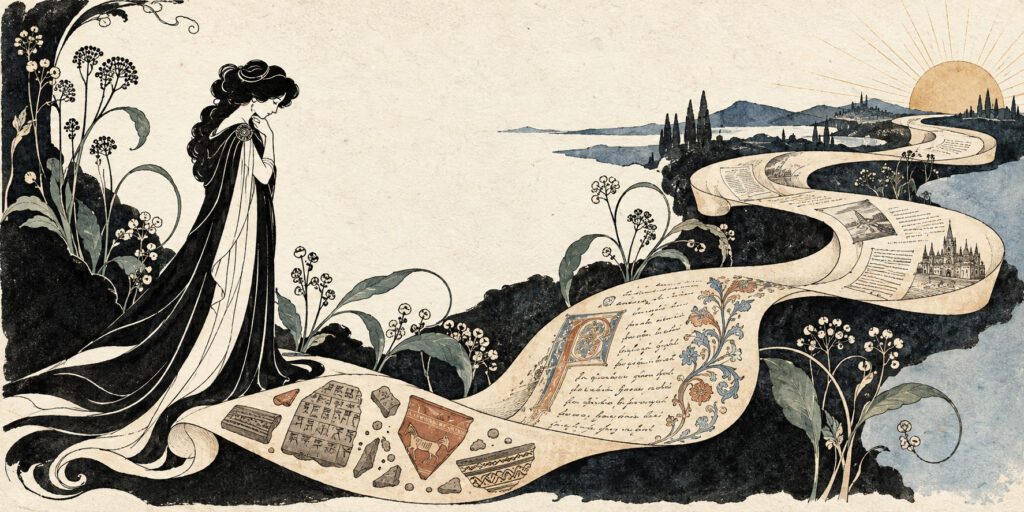
But I will digress on that elsewhere. What is most salient here is that I feel like I was moving along at a good pace, but once I realized I was basically acting like a stenographer for that which is prevailing wisdom, irrespective of its veracity, I nearly instantaneously felt stuck. Like, if we go back to before printed media, we have only unique artifacts that survived thousands of years. If we go back further, the information gets extremely sparse, and it is invariably subject to interpretation. Obviously, interpretation is not necessarily unhelpful or invalid, but the person/people interpreting always originate in a local setting, which can affect the interpretation.
So what is the proper course of action? It’s not as if I can simply take the “third person omniscient” narrator’s perspective here. Moreover, it’s not like I can simply exclude all the information that is like false. Simply determining what is true and what is false is extremely difficult and subject to many biases for many reasons. So how can I usefully relate information about history? My impression now is that I should first detail the types of information that was available at different times. For instance, we can determine approximately how old really old objects are now because of carbon dating. What did people use before that was possible?
Rather than walking readers through “history,” it seems like we should first know how history is recorded. That seems like a significant subject, and rather than mindlessly repeating what others have written, it seems quite interesting to examine what exactly underlies the written claims.
So, as the line goes: second verse, same as the first.