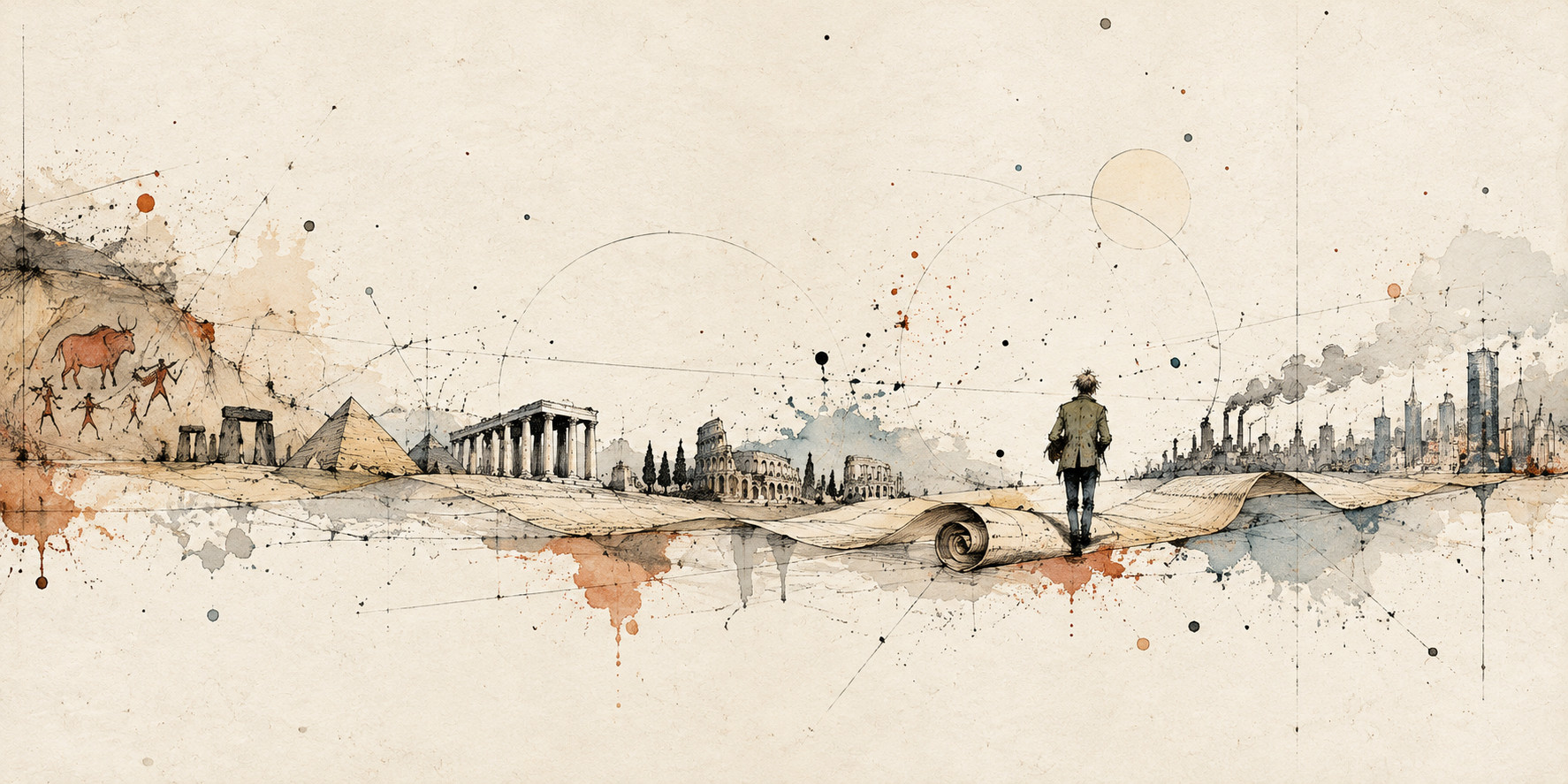
As we have gleaned so far, history is very speculative. In many ways, it’s the ultimate speculative fiction, particularly because it’s impossible to know about much of “pre-history” for certain, but compelling pre-historic histories can establish timelines that get used quite extensively, forming peoples’ understandings and opinions long before they have even learned that something like critical thinking even exists.
This afternoon was a perfect case in point. I have been trying to put together a thoughtful timeline going from then to now. However, I saw a gentleman on a podcast today, and I can see that my own approach simply leads me to do the same type of repetition I seek to avoid.
Interestingly, I just looked up the Wikipedia page for the guy I saw earlier, and the Wikipedia page essentially suggests he’s a quack. However, I reject that notion entirely. Firstly, he repeatedly stated that he was trying to establish several points that seem to undermine common theories related to human history. Secondly, he stated that he has a potentially fatal heart condition, and his goal is to bring more awareness to human history being substantially different than the current prevailing narrative. That position seems pretty non-controversial. Indeed, as I think about it further, I find it fascinating how people use certain terms and labels to reflexively discredit people and ideas. Moreover, the discrediting seems to proceed regardless of the merits of the underlying subject matter.
I watched the video I saw earlier because I wanted to make sure I was being both accurate and precise. The video made me realize I was essentially being a stenographer, repeating stories people already believe. That isn’t necessarily a problem. As I previously stated elsewhere, part of my motivation for writing here is that I want to establish “the story of history” in order to reduce uncertainty and ambiguity, so as to form a narrative (which admittedly sounds like I describing something impossible, I know). As I watched the video earlier, though, I thought, “Of the accepted narrative of history, what is even true?” That isn’t necessarily to say, what is provable?
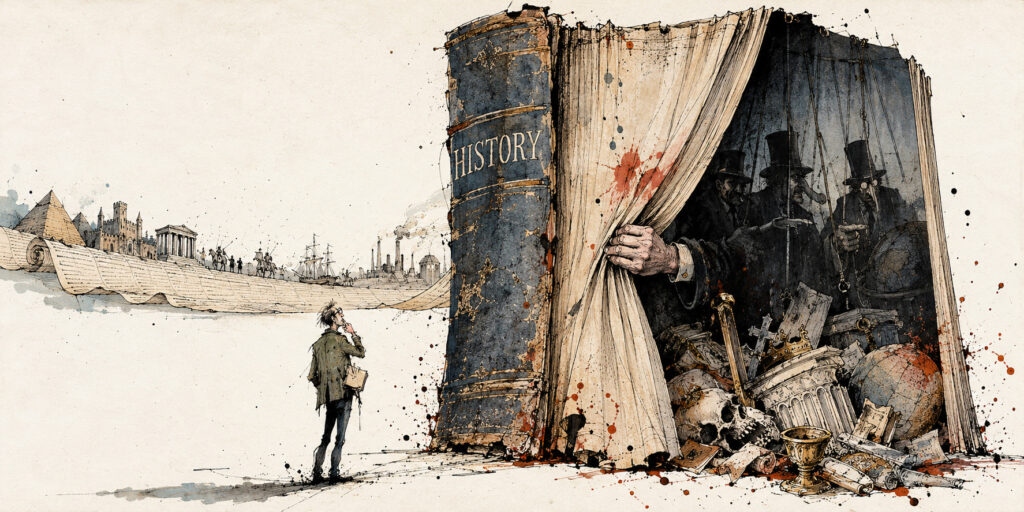
Now, as I read the Wikipedia page, there’s some real “Pay no attention to the man behind the curtain” energy. It makes me think about the nature of consensus. Specifically, how much of history is simply history because the dominant people established a narrative then defended their interpretation by manipulating conventional wisdom. That is scary, man.