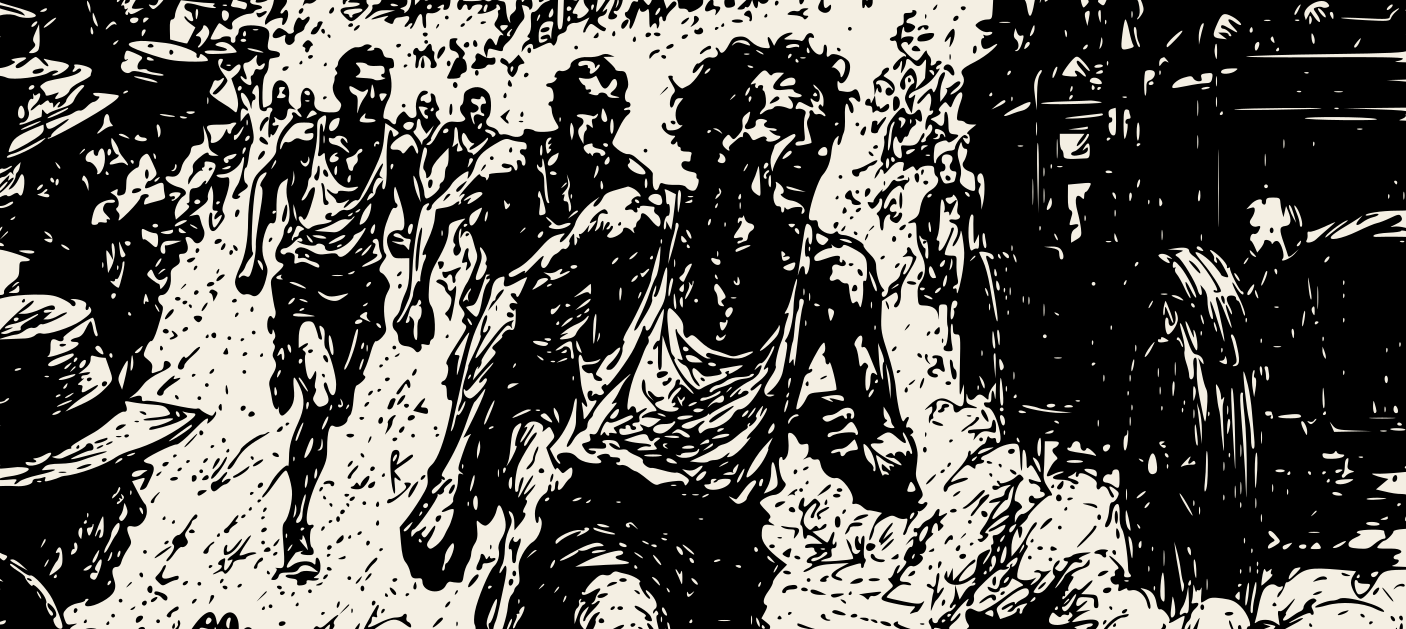
The 1904 Olympic Marathon in St. Louis was less of a prestigious athletic competition and more of a chaotic survival experiment. Held on a sweltering 90 degree afternoon in late August, the race remains one of the most bizarre and poorly executed sporting events in modern history.
Instead of a smooth track, the 32 competitors faced nearly 25 miles of unpaved, hilly dirt roads. Compounding the misery, lead cars and horses kicked up massive clouds of dust that left runners choking and gasping for air. One runner from California, William Garcia, was found unconscious on the side of the road with severe internal injuries caused entirely by inhaling the massive clouds of dirt.
If the heat and dust were not enough, the chief organizer of the games, James Sullivan, intentionally made things worse. Sullivan wanted to test the medical effects of purposeful dehydration on the human body. As a result, he allowed only a single water station on the entire course, located near the 12 mile mark. Runners were forced to push through extreme temperatures with practically no hydration.
The Imposter and the Poisoned Winner
The first man to cross the finish line was an American runner named Fred Lorz. The crowd roared in celebration, and Lorz was even preparing to be photographed with Alice Roosevelt, the daughter of the US President. However, the cheers quickly turned to boos. Lorz had suffered severe cramps around mile nine and decided to drop out. He hitched a ride in one of the support automobiles and rode for about eleven miles. When the car broke down, a refreshed Lorz hopped out, jogged the rest of the way to the stadium, and claimed victory. Once exposed as an imposter, he simply claimed it was all a practical joke.
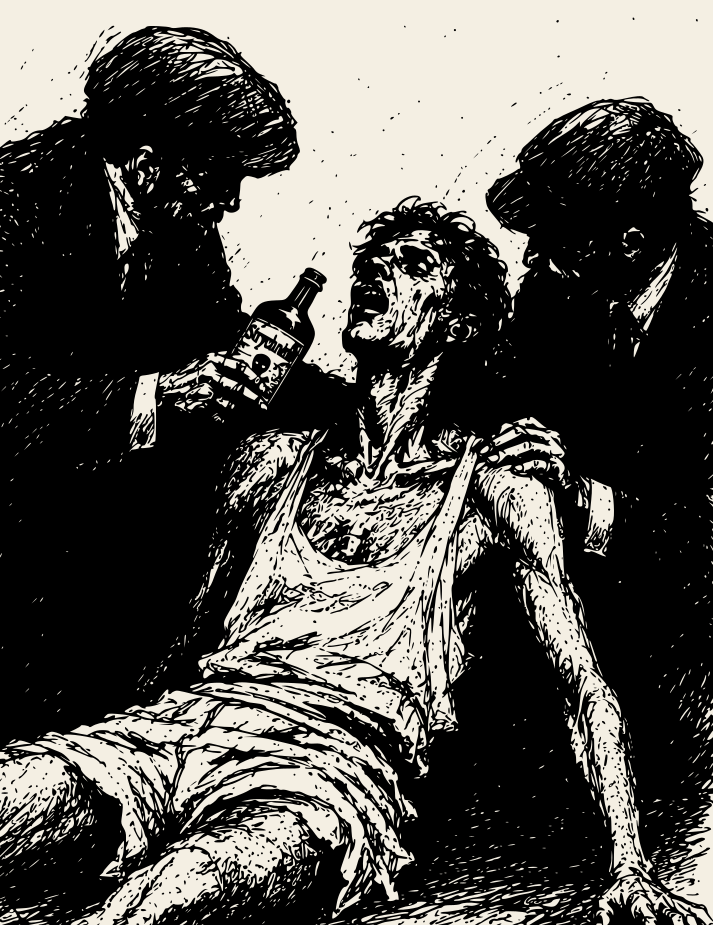
With Lorz disqualified, the actual gold medal went to Thomas Hicks, though he barely lived to claim it. Hicks was completely exhausted by mile 17 and begged for a drink. Instead of water, his trainers decided to give him an early 20th century performance enhancer. They fed him a mixture of raw egg whites and strychnine, a highly toxic compound commonly used as rat poison.
When Hicks began to struggle again a few miles later, they gave him a second dose of strychnine, this time washing it down with a slug of brandy. The toxic cocktail caused Hicks to hallucinate. He became pale, limp, and convinced the finish line was still twenty miles away. Unable to support his own weight, Hicks was literally carried across the finish line by his trainers, shuffling his feet mechanically in the air.
Unforgettable Competitors
Perhaps the greatest story of the day belonged to Felix Carvajal, a mailman from Havana, Cuba. Carvajal raised money to attend the Olympics by running laps around the town square in Havana to collect donations. Unfortunately, he lost all his travel funds in a dice game upon arriving in New Orleans. Refusing to quit, he hitchhiked and walked over 600 miles to St. Louis, arriving just in time for the race.
He showed up to the starting line wearing heavy leather work boots, a beret, and long wool trousers. A fellow runner took pity on him and used a pair of scissors to chop his pants into makeshift shorts right before the starting gun. During the race, Carvajal jogged along at a great pace despite his heavy boots, frequently stopping to practice his English by chatting with the spectators.
Eventually, hunger got the better of him. He stopped at an orchard along the route and snacked on a few apples. The apples turned out to be rotten, causing severe stomach cramps. Doing what any rational person would do in the middle of the Olympics, Carvajal found a shady spot, laid down, and took a nap. Astoundingly, he woke up, rejoined the race, and still managed to finish in fourth place.
The rest of the field fared no better. Two South African runners, Len Tau and Jan Mashiani, were the first Black Africans to participate in the modern Olympics. They ran barefoot, and Tau might have finished much higher in the standings had he not been chased a full mile off course by a pack of wild dogs.
The Aftermath
In the end, only 14 of the 32 hopefuls actually made it across the finish line. Thomas Hicks still holds the record for the slowest marathon winning time in Olympic history. The catastrophe was so absolute that Olympic officials strongly considered abolishing the marathon entirely. Fortunately, the event survived, but the 1904 St. Louis marathon will forever stand as a hilariously horrifying testament to the absolute limits of human endurance.